
REVIEWS
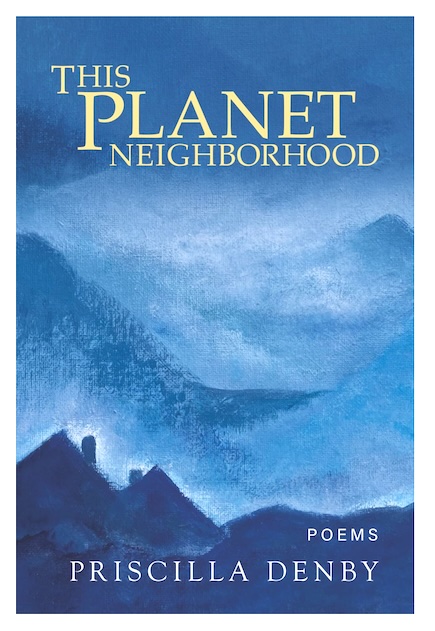
“A collection of poems that situates ordinary gestures in the vastness of time and space, where the body, nature, and the cosmos intersect.
Denby’s poems almost always begin at ground level—with a crosswalk in “A Man Yawning,” a kitchen more grown than built in “A Poet Going Blind,” or a poolside bench in “One Street in This Planet Neighborhood.” Descriptions of these everyday settings then spiral out into larger meditations on time and space. Rather than getting lost in airy metaphysics, the poems instead favor a sinewy, tactile lyricism, best illustrated in “Ribbed Cages,” in which Vermonters carry “pines in their spines” and “Petunias blush hemoglobin, marigolds no longer move. / Bones grow there—stone bones, // radish bones, wheat bones, and dogs have begun to sprout.” Denby splits the collection into three sections in which thematic iterations of water and music recur as metaphors for the cords binding people to others around them and the vastness of the natural world. The third section takes these connections even farther, reaching out into something that can only be described as galactic in scope. Even in these verses, Denby never loses earthbound details, and the poems employ a gentle humor and a willingness to play with language that borders on punning. The author evinces an innate kindness toward all the works’ subjects, from a child’s understanding of the importance of a bee to a pair of twin sisters’ harmless yet fascinating disagreement about their mother’s last moments. Denby’s collection is a stirring example of Gaston Bachelard’s concept of intimate immensity, in which instructions for facing down a coyote or observations about the ways shadows play while writing can open a door to temporal or cosmic reflection. Occasionally, the collection suggests naivete, as in a flight of fancy about George Washington reincarnating in the present day and obsessing over groceries—a poem that lacks satisfying context. Fans of poets like Mary Oliver will appreciate the work’s immersive contemplative quality and the way the poet reliably pulls readers back to the physical realm, always returning to tactile sensations and experiences.
A sensory journey that starts on front porches and goes on to encompass galaxies.” –Kirkus
THIS PLANET NEIGHBORHOOD is a riding—a dappled-wave-at sundown kind of ride! Moody, meditative, tender are the poems, their “vagaries of light,” the deft spill of their shadows.There is lyric, sometimes wry authority in this poetry. Through Denby’s generous imagination, we are in rich communion with “Earth’s every survival,” “the bodiless whisper / of a white wave.” Through her music, we find the possibility of connection, “a flicker of yes,” and the urgency of love, reminding us of “the basic geography of you and me/riding the light together / splicing time and space.” Jaywalkers, memory’s trees, Heathcliff, ocean, Ruth Stone, husband-to-be, Jacaranda, musicians, Einstein, field flowers, dogs and dogs and dogs—populate this luminous Neighborhood. Where do we find ourselves on the Planet? We find ourselves in “the stream/pulsing on sunlit stones.” How beautiful this book is to me. How essential! —Alessandra Lynch, author of Wish Ave and Daylilly Called It a Dangerous Moment
To read Priscilla Denby’s THIS PLANET NEIGHBORHOOD is to regain faith in the power of contemporary poetry. Denby guides us through a world rich with everyday wonder, where the sun comes with “good credentials,” coyotes are ready to engage with us, and “Charity lives in Vermont and has no bones.” With rich imagery and generous observations about the natural world and human relationships, she explores the interplay of past and present in her “neighborhood of infinite promise.” Priscilla is a poet who holds secrets about our place on this planet and of how small acts of observation can transform us. Read her. You’ll find more than “enough music to dance by.” —Carlos Zacarias Gomez, author of On a Leash of Fire: Poems for Lovers and Midnight Readers and Poems, Stories, and Tales: Other Times, Other Places
True to its title, This Planet Neighborhood articulates connections between macro and micro, between the cosmic and the close up. The poems are at once ecological, sociological, cosmological, and very down to earth. Meadow has been deleted “from the children’s / dictionary, in favor of broadband, blog,/ sidebar and cut and paste.” What do we lose when we lose a word? A connection that sustains in both directions. Denby is deeply woven with the natural world, saying of herself, “I’m not rich, though / I have deserts to spare, // but I have a jungle heart, / lush enough for loving.” Thus, she carries vast realms of earth. She knows herself by their realities. The concern for all of us and all the living systems we’re a part of—did I mention history? mythology?—is at the heart of Denby’s work. We need her vision.—George Ella Lyon, author of Back to the Light: Poems, Kentucky Poet Laureate 2015-2016
PRESS KIT
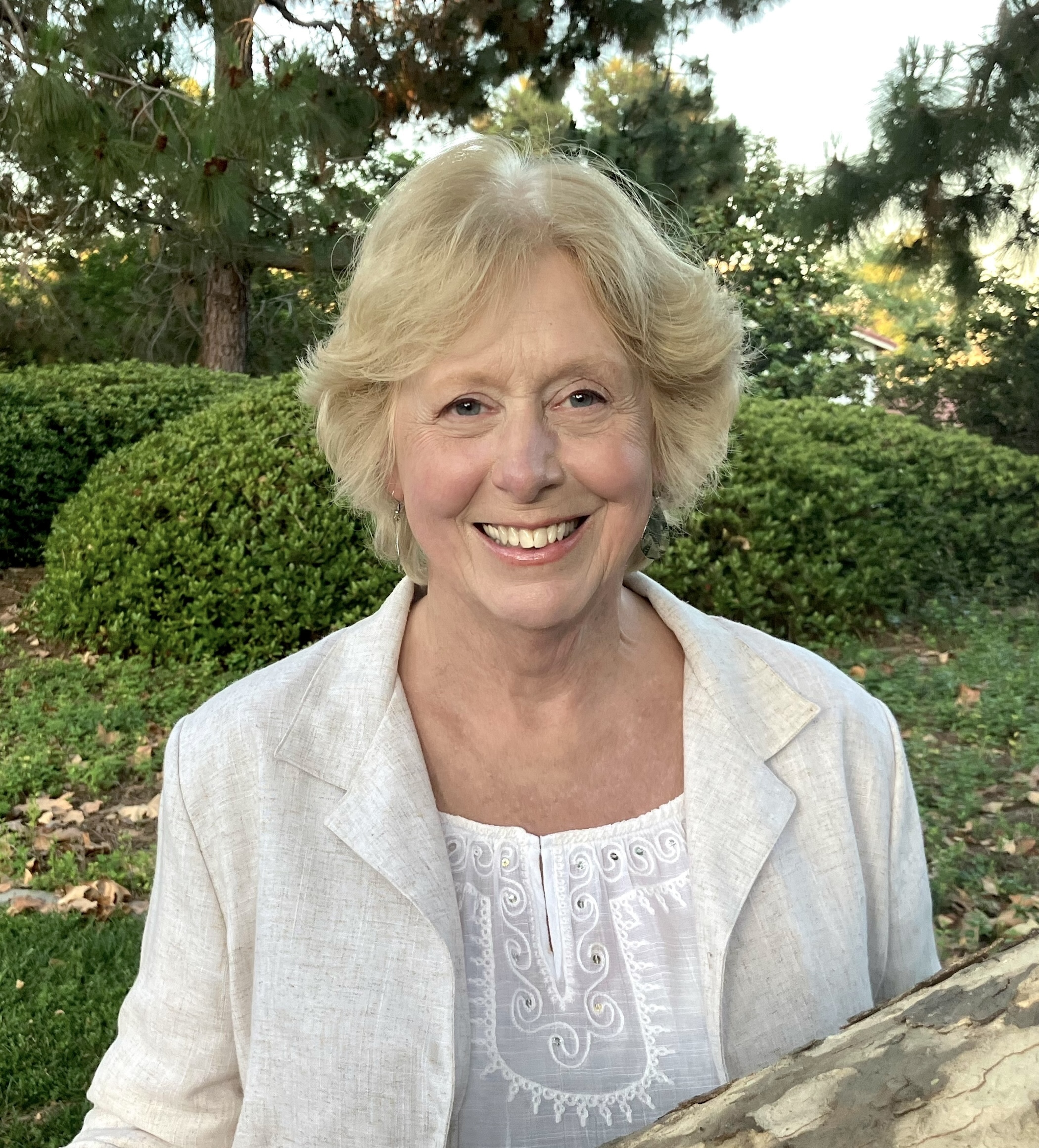
Large Format Image Of Priscilla
Extended Biography
Priscilla Denby grew up in Yonkers, New York in the shadow of New York City. She’s always loved the arts —from making mud-pies to drawing, painting and ceramics—but her first writing endeavor was “The Weekly Snooper,” detailing the second grade happenings in PS 21. She honed those skills to write newsletters, filmstrips, promotional materials, grants, academic articles, curricula, community studies, and other sundry undertakings in her various positions.
She’s worked as a nanny, waitress, day camp director, aide to the deaf, and consultant, but is primarily an educator, having taught English, Folklore, and Special Education to middle school through college students over thirty years. Serving as a chief designer for the Agency for Instructional Television, she helped develop ThinkAbout, the first comprehensive thinking and problem solving curriculum for the US and Canada. As Director of Special Programs for Pace University, she developed volunteer and social service programs, community studies, and service-learning directives, including taking students to third world countries to build schools and water systems.
Priscilla received a BA in English Honors from SUNY Albany and an MA (Writing) and PhD (Folklore) from Indiana University where she fell in with a wonderful group of poets and musicians, studied poetry under Ruth Stone, and won the American Academy of Poets First Prize. Her work has appeared in Poetry Northwest, Tiny Seed Journal, Indiana Writes, and elsewhere.
She now lives in southern California enjoying the natural world, especially dogs, the ocean, birds, and people. Her debut collection, This Planet Neighborhood, includes poetry written over fifty years.
Priscilla can be contacted directly at: priscilla@priscilladenby.com

Copyright Priscilla Denby 2025
 Priscilla Denby